Introducing Digital Wayfinding OS™
The Complete Guide to Siosi's Framework for Navigating Digital Complexity
Siosi Samuels
Dec 3, 2025
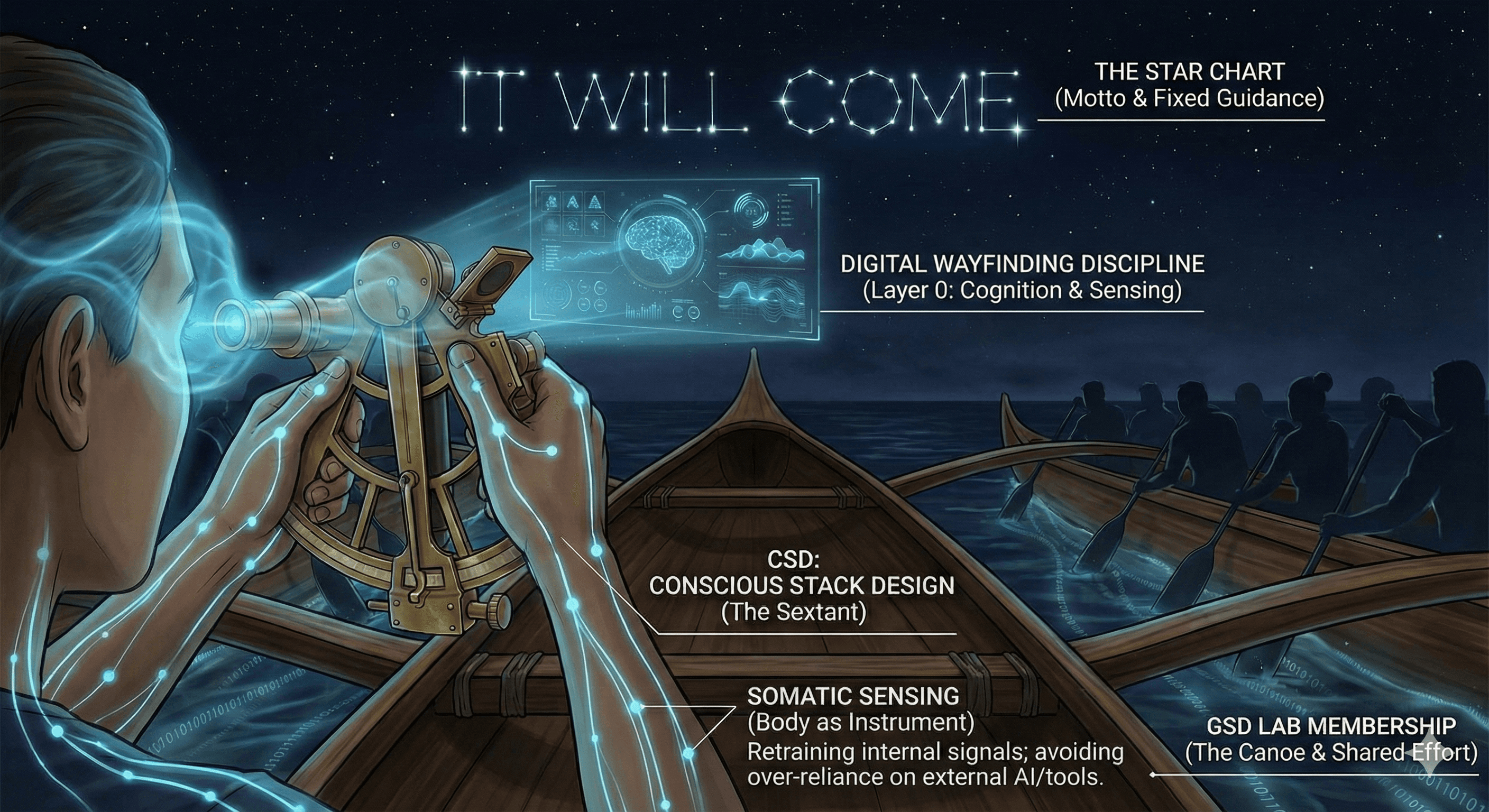
In a world drowning in digital noise, alignment is the new innovation. While your competitors chase the latest tech trends, you're about to learn how Polynesian navigators crossed thousands of miles of open ocean using nothing but stars, waves, and intuition—and how this ancient wisdom solves your most pressing digital transformation challenges.
Traditional digital wayfinding helps users navigate websites. Digital Wayfinding OS™ helps you navigate the future, using modern tools and technologies. This isn't about better UX patterns or navigation menus—it's about developing an operating system for making decisions when the path forward isn't visible yet.
Digital Wayfinding OS™ is the inaugural framework under the Wayfinding Systems™ IP parent brand, developed by George (Siosi) Samuels. It combines ancient Pacific navigation techniques with modern complexity theory, giving you a practical framework for thriving in uncertainty.
Before the five modules, Digital Wayfinding OS™ (DWOS) begins at what I call “Layer 0: Cognition” — the mind's operating environment, which continues to be bombarded with more and more digital tools/tech daily (exacerbated now by AI). This foundation, drawn from my Conscious Stack Design™ methodology, stabilizes attention, surfaces biases, and activates somatic discernment so patterns can be perceived before they're measurable. DWOS standardizes Orientation, Observation, Patterns, Sensing, and Environment atop Layer 0: Cognition, the pre-module substrate that governs attention and discernment.
In short: upgrade cognition first; technology and processes follow.
Module 1: Orientation — Establishing Your True North
Cognitive orientation precedes external orientation. When attention is scattered and bias runs unchecked, maps mislead. Establish a daily somatic check, define an attention budget, and name active biases—then position against stakeholders and constraints.
Orientation is where most digital initiatives fail. Not because of poor execution, but because they're pointed in the wrong direction from the start. In Polynesian navigation, orientation meant understanding your position relative to the stars, currents, and destination islands. In digital wayfinding, it means understanding your position relative to your stakeholders, stack stability, and future possibilities.
The Inner Compass Framework
Your True North isn't your company mission statement. It's the intersection of three elements:
“Stack” Stability: Your technical foundation's capacity for change, as explored further in Conscious Stack Design™
Stakeholder Coherence: Alignment between all parties affected by your decisions
Signal Strength: Your ability to detect subtle signals before they become obvious trends
Most organizations operate with a False North — usually disguised as quarterly targets, competitor analysis, or industry best practices.
These are lagging indicators, not modern navigation tools.
The Inner Compass Checklist
Use this checklist monthly to recalibrate:
Technical Debt Ratio: Is your stack stability above 70%?
Stakeholder Velocity: Are all stakeholders moving in the same direction?
Signal Detection Window: Can you identify subtle signals 6-12 months early?
Resource Allocation: Are 20% of resources dedicated to exploration?
Decision Velocity: Can you make decisions in days, not months?
Sarah, CTO of a Series B SaaS company, discovered her team was building features nobody needed. Using the Inner Compass Checklist, she realized her "North Star Metric" (daily active users) was a False North. Her stakeholders—enterprise customers—cared about compliance features, not engagement. Reorienting to stack stability and stakeholder coherence helped her team ship features that reduced churn by 34% in two quarters.
Orientation Tools
CSTACK Assessment: Evaluate your technical stack's capacity for change across five dimensions:
Coupling: How tightly connected are your systems?
Scalability: Can you 10x without architecture changes?
Testability: How quickly can you validate assumptions?
Adaptability: How fast can you pivot technical direction?
Knowledge: How distributed is your technical knowledge?
Time-to-Value: How long from idea to user value?
Score each 1-5. Total scores below 15 indicate dangerous rigidity. Above 20 suggests dangerous fragility. The sweet spot is 16-19—stable enough to execute, flexible enough to pivot.
Module 2: Observation — Seeing What's Actually There
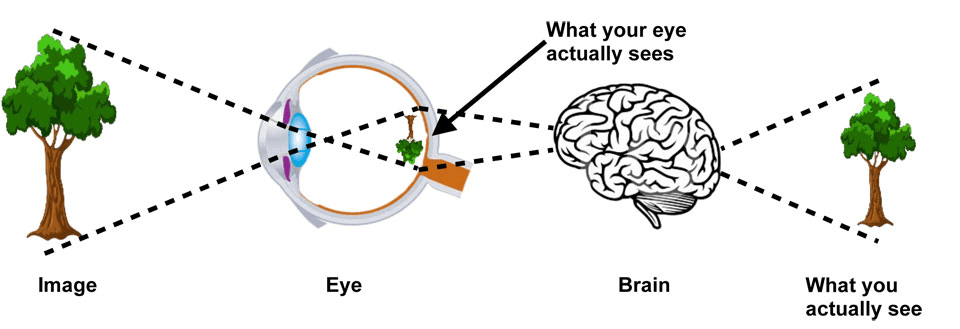
We don't see reality—we see our interpretation of reality. In digital environments, this cognitive bias is amplified by dashboards, metrics, and KPIs that create the illusion of objectivity while actually obscuring subtle signals.
Polynesian navigators read wave patterns, bird behaviors, and cloud formations. They weren't looking for what they expected — they were observing what was actually present. Most digital initiatives fail because leaders observe their expectations, not reality. Something I witnessed time and time again, regardless of org size.
The Observation Infrastructure
Build three observation layers:
Quantitative Layer: Metrics that reveal system behavior
Qualitative Layer: Human feedback that reveals meaning
Somatic Layer: Physical sensations that reveal misalignment
The somatic layer is most crucial yet most ignored. Your body detects stakeholder misalignment before your mind can articulate it. That sinking feeling in your stomach during roadmap planning? That's data.
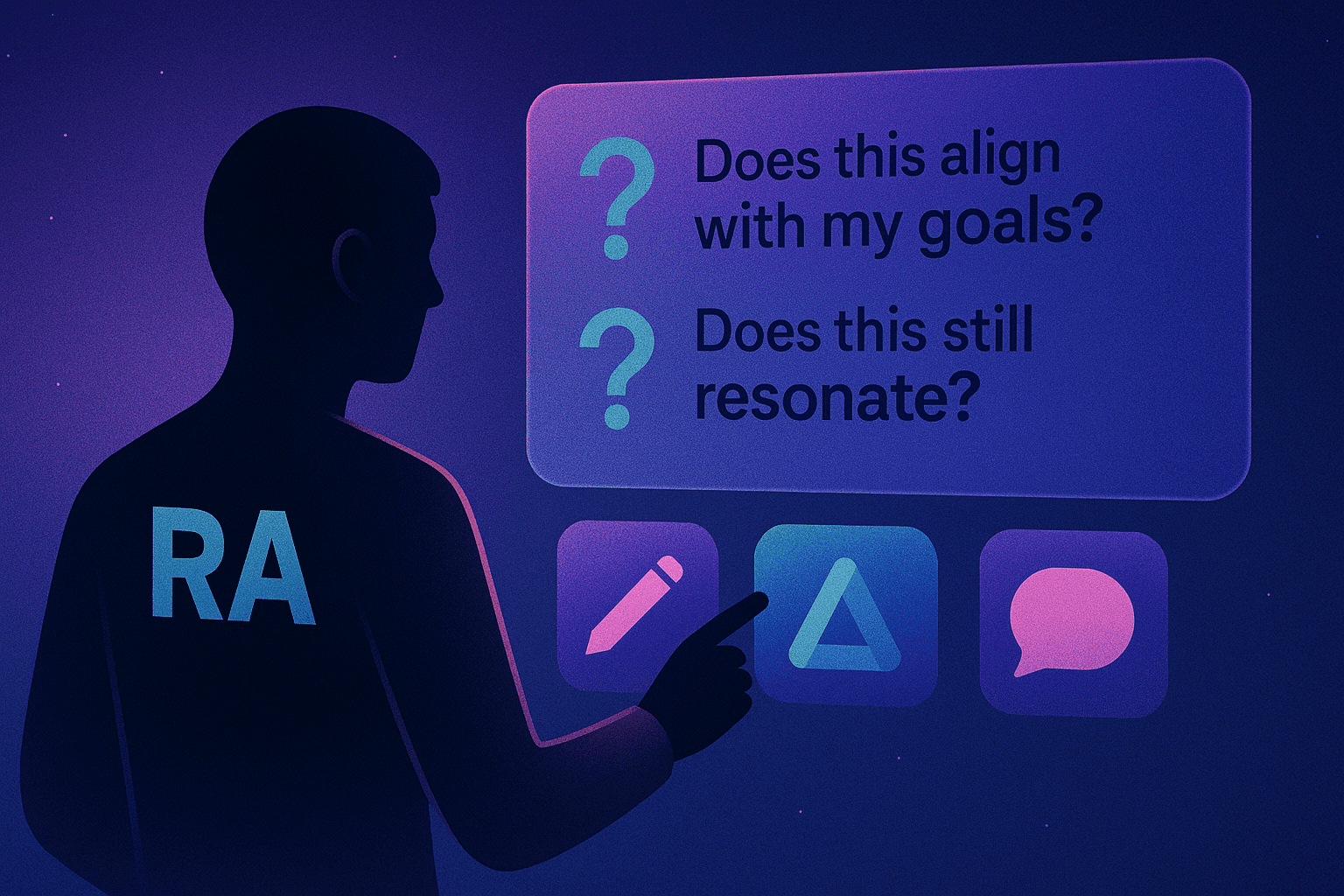
RA Questions for Digital Wayfinding
Use these Resonance Assessment (RA) Questions weekly:
What are users doing that surprises us? (Not what metrics show)
Which stakeholders are quietly disengaging? (Not who complains)
What decisions are we postponing? (Postponement reveals fear)
Where is energy flowing against our strategy? (Energy never lies)
What are we pretending not to know? (The truth you're avoiding)
A manufacturing company used RA Questions to discover their "digital transformation" was actually increasing frontline worker frustration. The data showed successful app deployments. The reality was workers using WhatsApp groups to circumvent the new systems. Observation revealed the truth: the digital tools solved management problems, not worker problems.
The Signal Strength Calculator
Quantify subtle signal detection:
Signal Strength = (Novelty × Frequency × Stakeholder Diversity) / Confirmation Bias
Novelty: How unexpected is the signal? (1-10)
Frequency: How often does it appear? (1-10)
Stakeholder Diversity: How many stakeholder types report it? (1-10)
Confirmation Bias: How much does it challenge current beliefs? (1-10)
Signals scoring above 200 require immediate investigation. Signals below 50 can be safely ignored. Most transformative opportunities hide in the 100-200 range—visible to observers but invisible to competitors.
Module 3: Patterns — Connecting Dots Before They Exist
Pattern recognition separates digital wayfinders from digital wanderers. Most organizations collect data but miss patterns because they're looking for confirmation, not discovery.
Polynesian navigators didn't memorize star positions—they understood star patterns. They could predict weather changes by recognizing subtle shifts in wave interference patterns. Similarly, digital wayfinders don't track metrics—they understand metric relationships.
The Pattern Matrix
Create a 4×4 matrix with:
Time Horizon | Internal Signals | External Signals | Stakeholder Signals |
|---|---|---|---|
Immediate (0-3 months) | Technical metrics | Competitor moves | Team sentiment |
Emerging (3-12 months) | Process friction | Market shifts | Customer behavior |
Systemic (1-3 years) | Architecture limits | Regulatory changes | Partner evolution |
Paradigm (3+ years) | Business model | Technology discontinuities | Generational values |
Place each subtle signal in the appropriate quadrant. Look for diagonal patterns—signals that connect across time horizons and signal types. These reveal transformative opportunities before they're obvious.
Pattern Confidence Levels
Rate pattern confidence:
Level 1: Single data point (10% confidence)
Level 2: Multiple data points, same source (30% confidence)
Level 3: Multiple data points, multiple sources (50% confidence)
Level 4: Pattern predicts future events (70% confidence)
Level 5: Pattern generates new insights (90% confidence)
Most organizations act at Level 2, creating feature factories. Digital wayfinders wait for Level 4, creating category-defining products.
The 3-Breath Decision Rule
When a pattern emerges, pause for three breaths before acting. During this pause, ask:
What stakeholder is missing from this pattern?
What would make this pattern false?
What are we not seeing because this pattern is so compelling?
This prevents premature pattern confirmation—the tendency to see patterns that confirm existing beliefs while missing contradictory evidence.
Module 4: Sensing — Feeling the Future
Sensing is pattern recognition at speed. While observation requires conscious attention, sensing operates below conscious awareness. It's the difference between analyzing wave patterns and feeling the ocean's mood.
Polynesian navigators spoke of "feeling" islands before seeing them. They sensed land through subtle changes in wave patterns, bird behaviors, and water color. Similarly, digital wayfinders sense market shifts before data confirms them.
Somatic Discernment for Digital Wayfinding
Your body processes information faster than your conscious mind. Use these somatic indicators:
Expansion: Lightness in chest, increased energy (opportunity)
Contraction: Heaviness in stomach, decreased energy (threat)
Turbulence: Uneven breathing, scattered attention (misalignment)
Flow: Deep breathing, focused attention (alignment)
Practice daily body scans during decision-making. Notice physical sensations when considering different options. Your body knows which path aligns with your True North, even when data is ambiguous.
Possibility Containers
Create structured spaces for sensing:
Daily: 10-minute morning check-in (expansion/contraction)
Weekly: 1-hour stakeholder sensing (what's unsaid?)
Monthly: Half-day offsite (what's emerging?)
Quarterly: Multi-day retreat (what's possible?)
A Polynesian cultural center used Possibility Containers to sense their community's needs. Quarterly retreats revealed elders' concerns about cultural preservation. Monthly stakeholder sensing revealed youth interest in digital experiences. This sensing led to AR experiences that preserved cultural knowledge while engaging younger generations—something no survey would have revealed.
The Navigation Dashboard
Track sensing metrics:
Metric | Daily | Weekly | Monthly |
|---|---|---|---|
Energy Level | 1-10 scale | Average trend | Pattern analysis |
Decision Speed | Time to decision | Number of reversals | Confidence vs accuracy |
Stakeholder Pulse | Quick check-ins | Sentiment analysis | Relationship depth |
Signal Detection | New signals | Signal validation | Pattern emergence |
Alignment Score | Gut check | Team alignment | Stakeholder coherence |
Review weekly. Declining metrics indicate need for recalibration. Improving metrics confirm alignment with True North.
Module 5: Environment — Shaping Reality Instead of Reacting
Environment is the only module that operates directly on external reality. While Orientation through Sensing prepare your internal state, Environment shapes external conditions. It's the difference between navigating existing waters and creating new currents.
Polynesian navigators didn't just read the environment—they understood their role in maintaining harmony with it. They performed rituals to ensure safe passage, not because they controlled the ocean, but because they recognized their interdependence with it.
Stakeholder Coherence Engineering
Most stakeholder management focuses on communication. Stakeholder coherence focuses on resonance—creating conditions where stakeholders naturally align without force.
Use the Stakeholder Coherence Check:
Map all stakeholders affected by your decision
Identify resonance points—where stakeholder interests naturally align
Design minimum viable coherence—smallest action that creates alignment
Create feedback loops that amplify coherence
Monitor for dissonance before it becomes resistance
A fintech startup used Stakeholder Coherence Engineering to navigate regulatory challenges. Instead of fighting regulators, they created a stakeholder circle including regulators, consumer advocates, and traditional banks. Monthly coherence sessions revealed shared concerns about financial inclusion. This led to products that served underserved markets while meeting regulatory requirements—turning potential opponents into allies.
Stack Stability Architecture
Your technical environment must balance stability and adaptability. Use the Conscious Stack Audit:
Component | Stability Score | Alignment Score | Action Required |
|---|---|---|---|
Core Infrastructure | 9/10 | 3/10 | Create abstraction layer |
Data Layer | 7/10 | 6/10 | Implement schema evolution |
Application Layer | 5/10 | 8/10 | Add contract testing |
Integration Layer | 4/10 | 9/10 | Implement circuit breakers |
User Interface | 3/10 | 10/10 | Deploy feature flags |
Target: Stability 7+ for core systems, Alignment 7+ for edge systems. Redesign components that score low on both.
The Environment Architecture Protocol
Shape your environment systematically:
Identify leverage points—where small changes create large effects
Design coherence experiments—test stakeholder alignment
Create stability zones—protect core systems from volatility
Build adaptability edges—maximize learning at boundaries
Establish feedback rhythms—regular environmental scanning
Implementation: The 5-Step Digital Wayfinding Process
Knowing the modules isn't enough—you need a process for applying them. This 5-step process transforms theory into practice:
Step 1: North Star Calibration (Week 1)
Conduct Cognition Audit: Bias inventory (recency, confirmation), attention budget (time in noise vs. signal), somatic baseline (expansion/contraction cues)
Complete Inner Compass Checklist
Identify False North indicators
Establish True North statement
Create stakeholder map
Set signal detection protocols
Step 2: Observation Infrastructure (Week 2-3)
Deploy RA Questions weekly
Build somatic awareness practice
Establish signal capture systems
Create observation rituals
Train team in subtle signal detection
Step 3: Pattern Laboratory (Week 4-6)
Build Pattern Matrix
Establish confidence thresholds
Practice 3-Breath Decision Rule
Create pattern validation experiments
Document emerging insights
Step 4: Sensing Rituals (Week 7-8)
Implement daily body scans
Create Possibility Containers
Build Navigation Dashboard
Practice somatic discernment
Establish sensing partnerships
Step 5: Environment Architecture (Week 9-10)
Conduct Stakeholder Coherence Check
Perform Stack Stability Audit
Design Environment Architecture
Implement feedback rhythms
Create coherence experiments
Use Cases: Digital Wayfinding in Action
Product Strategy: The Category Creation Playbook
A B2B SaaS company used Digital Wayfinding OS™ to create a new category. Traditional market research showed demand for better project management tools. Observation revealed something else: customers using their tool for change management, not project management. Pattern recognition connected this with subtle signals about digital transformation failures. Sensing revealed stakeholder misalignment between IT and business units. Environment shaping led to a new category: Change Intelligence Platform. Result: 300% revenue growth in 18 months.
Organizational Design: The Network Organization
A 2500-person company used an early form of my Digital Wayfinding OS to transform from hierarchy to network. Orientation revealed their True North: enabling rapid innovation. Observation showed information bottlenecks at middle management. Patterns revealed natural communication networks ignoring org charts. Sensing detected frustration with decision velocity. Environment shaping dissolved formal departments, replacing them with project-based teams around stakeholder coherence. Result: 4x faster time-to-market, 40% reduction in coordination costs.
Personal OS: The Portfolio Career
An executive used Digital Wayfinding to navigate career uncertainty. Traditional career planning focused on linear progression. Digital Wayfinding revealed something else: her stakeholders valued her ability to connect disparate industries. She designed a portfolio career as a "wayfinder" for organizations navigating digital transformation. Using the framework, she now advises 5 companies simultaneously, earning 3x her previous salary while working 50% less.
Measurement Framework: Navigation Metrics
Traditional KPIs track performance against plan. Navigation metrics track alignment with emerging reality.
Track cognition as a first-class metric: Cognitive Signal-to-Noise Ratio (time in high-quality attention), Bias Interruption Rate (weekly), and Somatic Discernment Accuracy (>65%). If cognition decays, re-orient before acting.
Metric | Description | Target | Measurement Method |
|---|---|---|---|
Cognitive Signal-to-Noise Ratio | Time in high-quality attention | >65% | Daily attention tracking |
Somatic Discernment Accuracy | Body signals predicting outcomes | >65% | Weekly retrospective validation |
Bias Interruption Rate | Active bias checks per week | >7 | Weekly bias log review |
True North Deviation | Average degrees off course | <15° | Weekly stakeholder alignment check |
Signal Detection Rate | subtle signals identified vs hindsight | >70% | Monthly pattern validation |
Stakeholder Coherence | Stakeholders moving same direction | >80% | Quarterly coherence survey |
Stack Stability | System resilience to change | 7-8/10 | Monthly stability audit |
Decision Velocity | Time from signal to action | <30 days | Decision tracking log |
Review monthly. Declining metrics indicate need for recalibration. Improving metrics confirm alignment with True North.
Common Pitfalls: When Digital Wayfinding Fails
Even experienced practitioners fall into these traps. Learn to detect early warning signs and execute recovery protocols before small deviations become major course corrections.
Pitfall 1: North Star Mirage
The Trap: Confusing stakeholder consensus with True North alignment Detection: Everyone agrees but energy feels flat, decisions feel heavy Recovery: Return to Inner Compass Checklist. Ask: "What stakeholder perspective is missing?" Often the most important stakeholder is future users who don't exist yet.
Example: A healthcare app optimized for insurance companies (current stakeholders) while ignoring patients (future stakeholders). North Star Mirage led to 60% user abandonment despite "stakeholder alignment."
Pitfall 2: Pattern Premature Confirmation
The Trap: Seeing patterns that confirm existing strategy while missing contradictory evidence Detection: All patterns support current direction, no patterns suggest pivot Recovery: Assign devil's advocate to build case against current strategy. Require at least three disconfirming patterns before major decisions.
Example: A social media platform saw patterns confirming their algorithmic feed was working. They missed patterns showing user fatigue with algorithmic content. By the time they noticed, TikTok had captured their demographic.
Pitfall 3: Somatic Bypassing
The Trap: Ignoring bodily signals in favor of "objective" data Detection: Data looks good but you feel exhausted/anxious, team morale declining Recovery: Implement mandatory somatic check-ins. Require decisions to pass "body yes" test before approval.
Example: A fintech CEO ignored his insomnia and digestive issues despite company metrics looking strong. Six months later, regulatory changes wiped out their business model. His body had been sensing the instability before data revealed it.
Pitfall 4: Stakeholder Homogenization
The Trap: Surrounding yourself with stakeholders who think alike Detection: Meetings feel easy, little disagreement, echo chamber effects Recovery: Introduce "adversarial" stakeholders—those naturally opposed to your direction. Measure stakeholder diversity across cognitive styles, not just demographics.
Example: A crypto company staffed entirely with crypto believers. They missed subtle signals about regulatory crackdowns because their stakeholder network excluded regulators and skeptics.
Pitfall 5: AI Acceleration Addiction
The Trap: Using AI to speed up decisions without improving sensing capacity Detection: Decisions happen faster but quality declines, team becomes dependent on AI recommendations Recovery: Implement "AI-free Tuesdays"—all decisions made using human sensing only. Use AI for observation, not interpretation.
Example: A venture capital firm used AI to screen startups, missing early investment in companies that didn't fit AI patterns. Their sensing atrophied until they missed a generational company because "AI said pass."
FAQ: Digital Wayfinding OS™
Q1: How is Digital Wayfinding OS™ different from agile or lean methodologies?
Agile and lean optimize execution efficiency. Digital Wayfinding optimizes navigation accuracy at the cognitive layer first. Use agile to build the right thing after wayfinding reveals what that thing is. Many teams use wayfinding quarterly to set direction, then agile to execute.
Q2: Can individuals use this framework, or is it only for organizations?
The framework scales from personal to organizational. Individuals use it for career navigation, relationship decisions, and learning priorities. The process remains identical—only the stakeholder map changes.
Q3: How long before seeing results?
Orientation improvements happen immediately—many report "finally understanding why previous efforts failed." Pattern recognition typically takes 6-8 weeks of practice. Environmental shaping effects appear 3-6 months after implementation.
Q4: What if stakeholders have conflicting True Norths?
This indicates stakeholder incoherence—the core problem Digital Wayfinding solves. Use the Stakeholder Coherence Check to identify resonance points. If no resonance exists, consider whether you're navigating the right waters.
Q5: How do you measure ROI on something so qualitative?
Use the Navigation Metrics framework. One client found their North Star Deviation was 45°—explaining why 70% of features went unused. Correcting course saved $2M in development costs annually.
Q6: Is this framework culturally appropriate for non-Pacific peoples?
George (Siosi) Samuels designed the framework to honor Pacific navigation wisdom (his part-Polynesian heritage) while being universally applicable. The principles—observation, pattern recognition, environmental harmony—exist in all navigation traditions. Use respectfully, understanding its cultural origins.
Q7: How does Digital Wayfinding handle black swan events?
By definition, black swans can't be predicted. However, wayfinding builds anti-fragility—your sensing infrastructure detects early ripples, your orientation flexibility enables rapid pivots, your environment architecture creates optionality. Clients using wayfinding navigated COVID disruptions in days, not months.
Q8: What's the minimum team size needed?
One committed person can begin. Individual wayfinding creates stakeholder coherence that attracts allies. Most organizations start with a "wayfinding cell" of 3-5 people, expanding as benefits become obvious.
Q9: How do you convince skeptical executives?
Don't. Instead, run a 30-day pilot on one decision area. Document the subtle signals you detect. When your predictions prove accurate, skepticism converts to curiosity. The framework sells itself through results.
Q10: What's the relationship between Digital Wayfinding OS™ and Wayfinding Systems™?
Digital Wayfinding OS™ is the inaugural framework under the Wayfinding Systems™ IP parent brand. Future frameworks will apply wayfinding principles to specific domains—biotech, climate, education—while maintaining the core 5-module structure.
Q11: Is DWOS just a decision framework?
DWOS is a navigation OS built on Layer 0: Cognition—it upgrades perception and discernment before execution. Unlike decision frameworks that optimize choice-making, DWOS stabilizes the cognitive substrate (attention, bias hygiene, somatic awareness) so you can detect patterns others miss. Think of it as training your inner navigator first, then giving that navigator better tools.
Tools & Templates Showcase
Tool | Purpose | When to Use | Access |
|---|---|---|---|
Layer 0: Cognition Guide | Cognitive substrate stabilization | Before framework implementation | Methodology primer |
Inner Compass Checklist | True North calibration | Weekly | Free download |
CSTACK Assessment | Stack evaluation & cognitive load reduction via stack coherence | Quarterly | Web application |
RA Questions | Reality assessment | Weekly | Notion template |
Pattern Matrix | Subtle signal organization | Monthly | Miro board |
Stakeholder Coherence Check | Alignment engineering | Bi-weekly | Workshop guide |
Stack Stability Audit | Technical architecture review | Monthly | Spreadsheet |
Possibility Containers | Sensing space creation | Quarterly | Retreat guide |
Navigation Dashboard | Progress tracking | Daily | Airtable base |
All tools integrate with the Digital Wayfinding OS™ certification program, ensuring consistent application across teams and organizations.
Next Steps: Your Wayfinding Journey
You have four paths forward:
Path 1: Solo Navigator (2-4 weeks)
Download the Inner Compass Checklist
Practice RA Questions for 30 days
Join the Digital Wayfinding community
Document your wayfinding journey
Path 2: Team Pilot (1-3 months)
Form a 3-person wayfinding cell
Run the 5-step process on one initiative
Measure Navigation Metrics
Present results to leadership
Path 3: Organizational Implementation (3-6 months)
Train internal wayfinding champions
Implement across one business unit
Document ROI and case studies
Scale to full organization
Path 4: Certified Practitioner (6-12 months)
Complete Digital Wayfinding OS™ certification
Join the Wayfinding Systems™ partner network
Help other organizations navigate complexity
Contribute to framework evolution
The ocean of digital complexity isn't getting calmer. Traditional navigation tools—strategic planning, market research, competitive analysis—were designed for predictable waters. They fail in the storms of digital disruption.
Digital Wayfinding OS™ gives you ancient tools for modern challenges. Tools tested over thousands of years across the world's largest ocean. Tools that work when GPS fails, when maps are wrong, when the destination keeps moving.
Your choice isn't whether to navigate this complexity—it's whether you'll navigate blindly or with wayfinding wisdom.
The stars are waiting. The currents are flowing. Your True North is calling.
Will you answer?